Make no mistake. The internet is changing. The way we consume content and discover information on the World Wide Web will gradually transform over the next few decades. Many people are dubbing this new internet “Web 3.0.”
Web 2.0 is what we’re familiar with today—social media, user-generated content, and stunning interactive websites. It’s also dominated by the “Big Tech”—popular media platforms like Google, Facebook, and X. Therein lies the biggest flaw of the current web: giant corporations own and control all the data.
Web 3.0 will be a different ballgame. This version of the internet will use blockchain technology and decentralized applications, granting users true ownership of their data. There will also be “shiny” perks, like immersive virtual worlds and applications that can predict your needs.
But the internet wasn’t always this advanced. To truly grasp the complexity of Web 3, we have to take a journey back in time. To where it all began.
In the beginning was Web 1.0
You could say Web 1.0 was the first Internet. Invented in 1989 by Sir Tim Berners-Lee, it was a technological marvel to a world that until then mostly communicated with telegraphs and analog telephones.
Over time, this internet has been aptly described as the “read-only” web. Why? Because it was static and primarily informational. Websites were like digital brochures—basic pages with text and maybe a few images.
The only form of navigation and interaction were hyperlinks that moved users from page to page. Web 1.0 was essentially a digital library. You could read, but you couldn’t talk or contribute. There were no user accounts. You couldn’t log into a profile and comment on something interesting or make suggestions. Back then, social media was still a wild concept.
And there were two: Web 2.0 introduced digital interaction
The term “Web 2.0” was coined by Darcy DiNucci in 1999, but it wasn’t until the 2000s that it became a song on people’s lips. This new internet flipped everything on its head. The first indicators of change were the flashy, interactive websites—a real upgrade from the dreary static pages of the “90s.
By the early 2000s, the internet exploded. First came the blogs, wikis, and forums. People could now create profiles and write their thoughts on websites. By the time the first social media apps, e.g., Facebook and MySpace, arrived, the world was no stranger to digital interaction. More platforms like YouTube and Instagram were introduced, and the rest is history.
While Web 1.0 is called the “read-only” web, Web 2.0 has earned an equally befitting moniker: the “read-write” web. Basically, instead of just reading, users can now write on the web. You can now log in to leave a comment or post text and media.
Leaping to Web 3.0: the decentralized future

Web 3.0 promises to be radically different from what came before. So, what should we expect?
Well, a big feature of Web 3.0 is decentralization and returning control to users. If Web 2.0 is controlled by massive platforms, Web 3.0 rewrites the script. Built on blockchain technology, it introduces decentralized applications (DApps) and smart contracts. We’ll define these later, but they basically allow users to own and control their data.
In this world, Facebook and Google don’t control or monetize your data; you do. Hence the appropriate term for Web 3.0—the “read-write-own” web.
That’s not all, however. This new web is engineered by advanced AI and machine learning. Each user gets a highly personalized version of the internet. Augmented reality (AR) and virtual reality (VR) will also play a part.
What is Web 2.0?
Web 2.0 is the internet we use today—social and collaborative. This web is defined by interactive platforms that let people talk to each other: social media, websites, and forums.
Key Features of Web 2.0:
- User-Generated Content: This is the domain of platforms like YouTube, Facebook, and Instagram. Web 2.0 is populated by the content users of these platforms create, e.g., videos, posts, blogs, and comments.
- Social Networking: What defines Web 2.0 users are their online communities and digital connections, i.e., friends and followers. Platforms like X, LinkedIn, and Reddit come to mind.
- Rich UX/UI: Web 2.0 features good-looking, user-friendly sites with intuitive navigations, dynamic, “moving” content, and fluid layouts. Users can also interact in real-time with live comments or chat features.
- Collaborative Platforms: Beyond interacting and sharing, the internet allows people to work together—in real time. Think of platforms like Notion, Google Docs, or Canva Teams. On a global level, Wikipedia is a great example. Thousands of users from all over the world can contribute to the same knowledge database.
- API Integrations: Web 2 owes a lot of its convenience to APIs (Application Programming Interfaces). These APIs allow different applications to talk to each other. It’s why you can log into Canva or create a Spotify profile using your Facebook or Google account.
- Cloud Computing: No need for local data storage like hard drives or memory cards. Web 2.0 harnesses cloud-based storage, which is the backbone of services like Google Drive, Dropbox, and Apple’s iCloud.
Technologies Powering Web 2.0:
- HTML5 and CSS3: These programming languages provide the elements needed to create rich, interactive websites.
- JavaScript Frameworks: These are libraries of pre-written code that simplify frontend web development. The major examples are React, Angular, and Vue.js. Essentially, Javascript is used for responsive and interactive UX on sites. These libraries make the task easier.
- AJAX (Asynchronous JavaScript and XML): AJAX is what powers real-time updates on social media or stock market feeds. How? By allowing applications to send and receive data in the background, even while running other tasks.
- Databases: Platforms like Facebook and Google store user data in databases. Some popular databases include MySQL, MongoDB, and PostgreSQL.
What is Web 3.0?
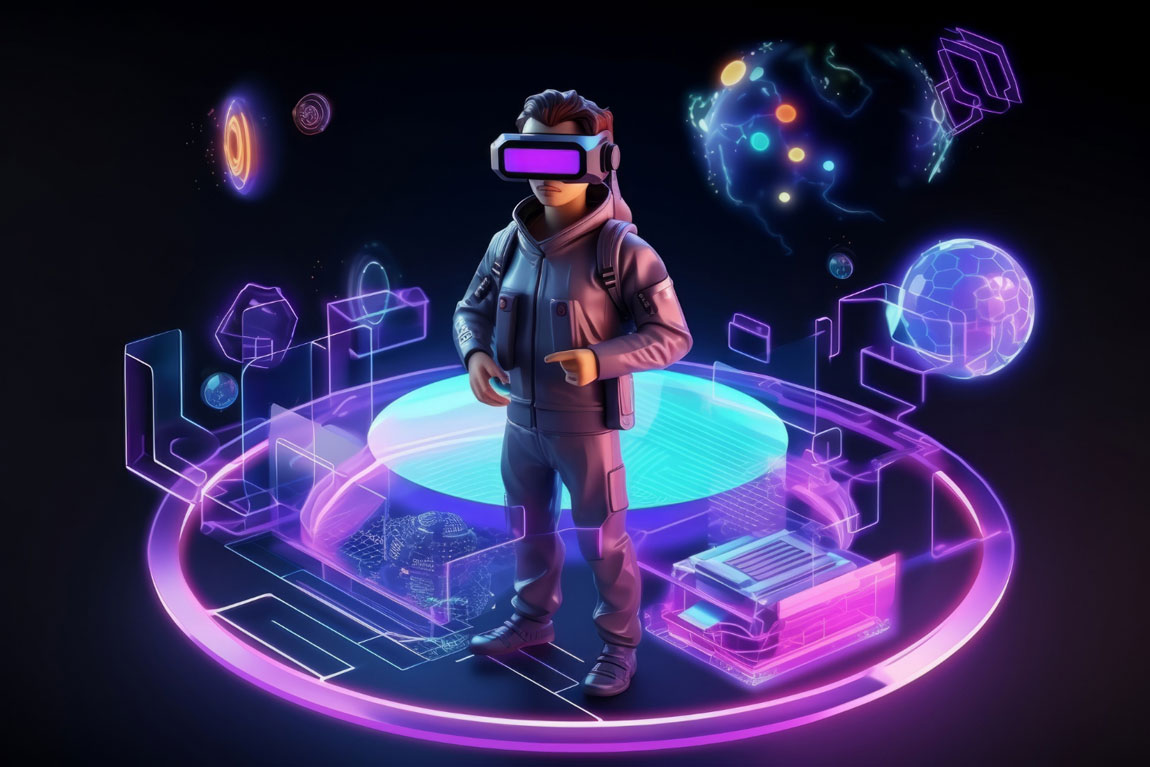
Web 3.0 represents a more “sentient” internet. Using AI and machine learning, it will introduce intelligent applications that only grow more capable in their ability to understand users.
What this means? Each user will have a digital experience tailored especially to their preference and convenience.
Web 3.0 also moves away from centralized control by corporations. Built on blockchain technology, it will return ownership of data and content to individuals, not big companies.
Key Features of Web 3.0:
- Ownership of Data: This is Web 3.0’s biggest brag. Users get true ownership, choosing who can access their personal information and content. You also control how your content is used and monetized.
- Cryptocurrencies and Digital Tokens: Cryptocurrencies, e.g., Bitcoin and Ethereum, allow users to transfer value without intermediaries. So, they are central to Web 3.0. With digital tokens, you maintain complete ownership of your digital assets—whether it’s art, music, or virtual real estate.
- Interoperability: In Web 3.0, applications can connect seamlessly, no matter the platform. Basically, users can move assets between apps without any barriers.
- Smart Contracts: Smart contracts are agreements programmed to be automatically signed when certain conditions are met. Because they are written in code and automated based on prepared information, they might eliminate the need for middlemen such as banks or lawyers in transactions.
- Augmented and Virtual Reality: AR and VR are already here. But they’ll likely be more popular in Web 3.0. Augmented reality lets you attach digital elements to the real world, e.g., visualizing potential furniture in your room. Virtual reality takes users to a completely digital realm. Think being able to pick items from a virtual grocery store.
Technologies Powering Web 3.0:
- Blockchain Technology: Blockchain is the core infrastructure for Web 3.0. With this technology, you can store data in a transparent, tamper-proof way. Transactions and interactions are recorded across a network of computers, not just one. This makes them more secure and verifiable.
- Cryptography: Uses advanced encryption, like quantum encryption, and hashing techniques to secure data. This ensures privacy and security in Web 3.0 transactions.
- Distributed Computing: Web 3.0 relies on decentralized systems like IPFS (InterPlanetary File System). These store data across multiple nodes, not centralized servers.
- Artificial Intelligence and Machine Learning: Advanced AI can analyze user preferences and anticipate their needs. In return, users will get highly personalized experiences and intuitive web interactions.
Web 2.0 Vs Web 3.0: Key Comparisons
-
Interactivity
- Web 2.0: It introduced the interactive web. Users could participate actively rather than just consume content. Social media trends, real-time updates, memes, blogs, and forums are hallmarks of Web 2.0. However, all this interactivity is still governed by centralized platforms.
- Web 3.0: Web 3.0 enhances interactivity with more personalized and immersive experiences. Unlike in Web 2.0, where the platforms can influence what you see on your social media feed, you can truly tailor content and interactions to your preference. Users can also interact with decentralized applications (dApps) without needing a third party. This creates a more peer-to-peer experience where individuals have more autonomy in how they engage with the web.
-
Data Privacy and Security
- Web 2.0: Data privacy (or lack of it) is one of the biggest flaws in Web 2.0. Large corporations store users’ personal data in centralized databases. These make it easier for hackers to exploit large amounts of sensitive information. Worse, users barely know how their data is used.
- Web 3.0: Apart from decentralized networks, end-to-end encryption will be more popular in Web 3.0. These two technologies will enhance user privacy and security. Then there’s blockchain technology, which ensures that no single entity has access to private data. Additionally, smart contracts are used for transactions and interactions. This adds more transparency, protecting users from breaches and unauthorized access.
-
Monetization
- Web 2.0: The business model is largely built on advertising. Platforms offer free services in exchange for users’ data. Then they generate revenue by selling targeted ads based on this data.
- Web 3.0: Users can directly benefit from participating. No need for intermediaries. This is possible because of monetization models like cryptocurrencies, non-fungible tokens, and decentralized finance (DeFi).
-
Economic Impact
- Web 2.0: Created economic monopolies. A handful of companies control most of the web’s data and profit from it. The result? Wealth is concentrated among a few tech giants, and individual users have little economic power.
- Web 3.0: Can lead to a more democratized economy. Without intermediaries, individual users, creators, and developers can earn directly from their contributions. Money is distributed more evenly, and economic inequality is reduced. Instead of relying on traditional banks to borrow, store, and earn interest on money, users can do all these with a peer-to-peer network.
-
Control and Censorship
- Web 2.0: Big platforms can censor content and control the information flow. This centralized control raises concerns about free speech and censorship.
- Web 3.0: The decentralized architecture offers censorship resistance. Since there is no central authority, content can’t be easily removed or censored. This promotes freedom of expression. However, it also raises concerns about managing harmful content.
Web 3.0: What It Could Mean To Your Business?
Currently, Web 3.0 is hardly a reality. It’s mostly riding on the hype of eager VCs, startups, and cryptocurrency enthusiasts.
However, it can’t be classified as a hoax. Most of the technologies that’ll power Web 3.0 are already in place—blockchain, AI, machine learning, cryptography, and extended reality (XR).
Rather than a single defining launch, like the unveiling of the PC, 3.0 will likely be introduced by a series of breakthroughs. It may also not garner mass adoption immediately, but gradually, it’ll become a part of our daily lives. When it does, it will affect many businesses.
Here’s what to expect:
New Ways to Interact With Customers
Customer relationship management (CRM) will change a lot. Especially for B2B and B2C businesses in high-volume markets. Consumers will have more control over who can access their data. So, businesses will find it harder to gather data unless they can build trust with their buyers.
Indirect data tracking methods—website cookies, analytics, email tracking, and social media monitoring—will be highly restricted. To learn more about your buyers, you’ll have to interact with them directly. This could be through personal and group interactions, surveys, reviews, or even focus groups.
New Ways to Advertise
Digital marketing and advertising on big tech platforms—Facebook, Google, Instagram, etc.—may gradually become obsolete. Web 3.0 will promote decentralized apps. The metaverse might also become popular.
As more consumers shift from big tech to DApps and the virtual world, businesses must learn how to reach customers in these new applications. Data tracking and ad targeting won’t be as simple as they used to be.
Instead, brands would likely rely more on community engagement, direct interaction, and influencer marketing to reach buyers. You’d also have to learn how to use AR and VR to display your products.
What are the Challenges of Web 3.0?
Steep Learning Curve
Blockchain, cryptocurrency, and smart contracts are not easy to understand. The average user will need some education to readily access Web 3.0. Setting up a digital wallet for cryptocurrencies can be confusing. Without user-friendly interfaces and tutorials, many people won’t adopt Web 3.0.
Scalability Issues
Web 3.0 technologies like blockchain are not as scalable as centralized systems. Blockchain networks can be slow and expensive for large-volume transactions. For instance, Ethereum is one of the leading blockchain cryptocurrencies. Its users sometimes deal with high transaction fees and slow processing times during peak usage.
Many Web 3.0 apps will be built on blockchain. So, they likely won’t be convenient for high-volume activities.
Security and Regulation
Decentralization raises security concerns. How? Blockchain is secure, but decentralized apps and platforms are still vulnerable to attacks.
There’s also the issue of national regulations. Many countries still heavily regulate the use of cryptocurrency and decentralized networks. Businesses in those countries may face legal complications trying to use Web 3.0 systems.
Challenging User Experience (UX):
Web 3.0 provides more freedom and privacy. However, this comes at a cost. In Web 2.0, you can easily log into apps with a single click using Facebook or Google—knowing that these platforms have your password and personal data.
In Web 3.0, you keep your data and passwords. But you also have to manage things like private keys, wallets, and decentralized identities. Forgot the password to your email account? You can easily retrieve it or set a new password. However, lose the private key to your cryptocurrency wallet, and you could lose access to your digital assets forever.